Understanding how to read a UPC code is essential in today's retail world. UPC codes are everywhere, from grocery stores to online shopping. They help track products and streamline sales processes. A UPC code, or Universal Product Code, is a type of barcode. It consists of 12 numerical digits. These digits hold key information about the product and its manufacturer.
First 6 digits are company prefix number. The next five digits represent the product number. The final digit is a check digit, ensuring the code's accuracy. Reading a UPC code can seem complex at first. However, with a little guidance, anyone can learn to decipher these codes. This guide will walk you through the process step by step.
You'll learn how to read a UPC code by eye and with a scanner. We'll also explore using smartphones to decode these barcodes. Understanding UPC codes can enhance your shopping experience and improve inventory management.
Whether you're a retail professional or a curious consumer, this guide is for you. Let's dive into the world of UPC codes and unlock their secrets.
What Is a UPC Code?
A UPC code, short for Universal Product Code, is a widely used barcode. It consists of a series of black and white bars and a sequence of numbers. These codes are crucial for product identification in retail.
The primary function of a UPC code is to streamline checkout processes. By scanning the code, retailers can quickly retrieve product details. This speeds up sales and reduces human errors at the register.
Each UPC code is unique to a product and its packaging. It ensures that each variation of a product has its own code. This system aids in efficient inventory management and tracking.
UPC codes are part of the larger GS1 system. The GS1 system standardizes global trade item numbers. This standardization is essential for modern retail operations.
Key features of UPC codes include:
- 12-digit numerical sequence
- Unique identification for products
- Used worldwide in retail settings
Understanding these elements is crucial for anyone involved in product sales and inventory.
The Structure of a UPC Code
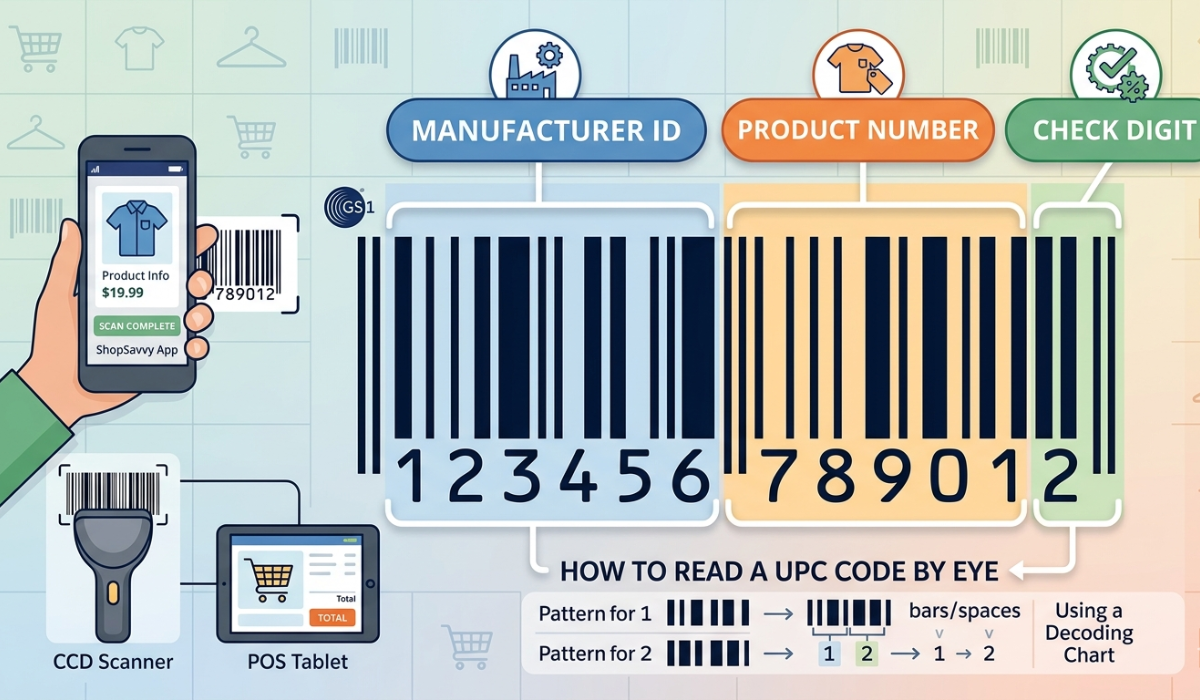
A UPC code is a detailed numerical structure composed of 12 digits. Each part of this structure serves a unique purpose. Understanding these parts is key to decoding the entire code. The structure is divided into three main sections. These are the manufacturer identification number, the product number, and the check digit. Each has a distinct role in the UPC system.
The first six digits are crucial for identifying the manufacturer. This identification is consistent across a manufacturer's entire product line. It helps to categorize products from the same brand. Next is the product number, consisting of five digits. This number is unique to each specific product and its packaging. It differentiates similar products in a manufacturer's lineup.
The last digit in the UPC is the check digit. It’s a single number vital for verifying the code's accuracy. This digit is computed through a specific algorithm.
In summary, a UPC code includes:
- Manufacturer Identification Number (6 digits)
- Product Number (5 digits)
- Check Digit (1 digit)
Each part plays an essential role in the accurate recognition and processing of the product.
Manufacturer Identification Number
The manufacturer identification number is the first six digits of a UPC code. This sequence is assigned by the GS1 organization. It is a unique identifier for every manufacturer.
Manufacturers pay to get these identification numbers. This ensures they get a unique code without duplicates. It forms the basis for recognizing the source of a product.
The number allows retailers to group items by manufacturer. It simplifies inventory management and enhances data organization. This can be especially useful for businesses with extensive product lines.
Key characteristics of this identification number include:
- 6-digit length
- Uniqueness per manufacturer
- Assigned by GS1
Having a unique number is crucial for businesses with varied product offerings.
Product Number
The product number follows the manufacturer ID and is specific to each product. This five-digit number distinguishes individual products within a brand's line. It is critical for unique product tracking.
This number allows stores to handle different product variations smoothly. Whether it's size, color, or packaging, each gets its own product number. This helps in precise tracking and reporting.
Retailers use product numbers to manage stock precisely. By differentiating items, they maintain better control over inventory levels. It reduces instances of overstocking or stockouts.
Features of product numbers are:
- 5-digit length
- Unique to each product and variation
- Vital for inventory accuracy
These numbers are indispensable for detailed sales analysis and inventory control.
Check Digit and Its Importance
The check digit is the final number in a UPC code, but its role is pivotal. It's derived from a calculation using all preceding digits. The purpose is to validate the accuracy of the entire code.
Calculating the check digit involves a specific formula. It checks the integrity of the barcode when scanned. An incorrect check digit implies a scanning error.
This digit prevents errors during transactions. By confirming accuracy, it helps avoid pricing mistakes at checkout. It enhances consumer trust and minimizes disputes.
Essential aspects of the check digit include:
- 1-digit length
- Calculated using a specific algorithm
- Ensures scanning accuracy
Understanding and maintaining the accuracy of the check digit is vital.
How to Read a UPC Code by Eye
Reading a UPC code by eye may seem daunting, but it's possible with some practice. This skill is useful when scanners aren't available. It also helps you understand how gs1 barcodes operate fundamentally.
Start by focusing on the bars and spaces. They represent numbers from 0 to 9. Each number corresponds to a specific pattern of bars and gaps of varying thickness.
The first step is recognizing the sections of the code. Break them down into the manufacturer identification number, the product number, and the check digit. Each section has a defined length and pattern.
Manual reading involves interpreting these patterns into numeric digits. The correct translation requires attention to detail to avoid errors.
You can enhance your accuracy using a decoding chart. This chart shows the representation of each number. It acts as a reference to ensure you interpret the bars correctly.
Some tips for reading UPCs by eye include:
- Identify the start, middle, and end guards.
- Use a decoding chart for accuracy.
- Check your results with the check digit.
Decoding the Bars and Spaces
Decoding the bars and spaces of a UPC requires understanding their pattern. Each digit from 0 to 9 has a unique representation. The bars vary in thickness and are grouped with spaces.
Start by identifying the 12 digits’ arrangement. Each pattern consists of two black bars and two white spaces. Their thickness combination dictates which number they represent.
Consider using a guide that lists these patterns. Such a reference helps ensure you don't misinterpret similar-looking patterns. This approach is crucial for accuracy.
When decoding, focus on these areas:
- Differentiate between thick and thin bars.
- Use pattern references for each number.
- Verify your decoding with a check digit calculation.
Regular practice improves your speed and precision in decoding UPC numbers.
Using a Decoding Chart
Decoding charts are invaluable when reading UPC codes manually. They provide a straightforward reference. This chart outlines the bar-space pattern for each digit from 0 to 9.
Using the chart involves matching the visual pattern to numbers. Start with the left-hand side of the barcode. Decode and then compare each segment to the chart.
For efficient decoding, consider these steps:
- Refer to the chart while examining each section.
- Cross-check patterns with their numerical counterparts.
Decoding becomes easier with practice and consistent chart use. This method ensures high accuracy without requiring advanced technology.
How to Read a UPC Code with a Scanner
Using a scanner is one of the fastest ways to read a UPC code. Scanners convert the barcode into a digital format, making product tracking efficient. This is particularly useful in retail and inventory management.
Begin by positioning the scanner's light beam over the UPC code. Hold it at a steady angle and distance. Most scanners are designed to read quickly and accurately with minimal effort.
Scanners are equipped to handle various lighting conditions. They can read codes in dim settings, reducing the chances of error. This adaptability makes scanners ideal for many retail environments.
Scanners can connect to point-of-sale systems to retrieve product details instantly. This process streamlines operations at the checkout counter. It ensures accurate pricing and inventory tracking.
For effective scanning, remember these key points:
- Position the scanner properly.
- Ensure the code is not damaged or obscured.
- Practice regular maintenance of scanning equipment.
Types of Barcode Scanners
Barcode scanners come in several types, each serving different needs. The most common type is the laser scanner. It's efficient for both handheld use and fixed installations, offering quick reads.
Another popular type is the CCD scanner. This scanner relies on an imaging sensor, capturing the entire barcode in one go. It's known for its durability and lack of moving parts.
2D scanners are emerging, ideal for reading both UPCs and QR codes. They can scan from labels or screens, offering flexibility. This type is vital in mobile and digital transactions.
When choosing a scanner, consider:
- The environment where you'll use it.
- The types of codes you need to scan.
- The budget available for purchasing equipment.
Tips for Accurate Scanning
Achieving precision in scanning requires a few practices. Proper technique not only ensures efficiency but also reduces errors. Consider these tips to enhance your scanning accuracy.
First, ensure the barcode is unobstructed and clean. Dirt or damage on the code can lead to misreads. Position the scanner directly in front of the barcode, maintaining a steady hand for consistency.
To optimize scanning success, focus on:
- Keeping codes clean and undamaged.
- Maintaining a consistent scanning distance.
By integrating these habits, you can improve scanning reliability and the speed of operations.
How to Read a UPC Code with a Smartphone
Smartphones make reading UPC codes convenient and accessible. With apps that utilize the phone's camera, you can scan and decode barcodes effortlessly.
To start, download a barcode scanning app on your smartphone. Open the app and position the camera over the UPC code. Ensure good lighting and a clear view for best results.
The app will read the barcode and display product information on the screen. This includes details such as price, reviews, and availability.
Smartphones are versatile tools. They offer features like saving scanning history and comparing prices online. These enhance the consumer shopping experience greatly.
When using your smartphone for scanning, remember to:
- Ensure proper lighting for the camera.
- Hold your phone steady over the barcode.
- Explore app features for additional benefits.
Recommended Apps and Tools
Several effective apps can turn your smartphone into a barcode scanner. They are user-friendly and available on various platforms.
One popular choice is "QR Code Reader" for both Android and iOS users. Another is "ShopSavvy," which offers additional price comparison features.
These apps often have extra tools that enhance usability:
- Scanning history for record-keeping.
- Price tracking for better deals.
Using these apps not only saves time but also empowers informed purchase decisions. Always choose apps with good ratings and reviews for reliability.
Understanding the UPC Code Prefix
The UPC code prefix is a vital component of the 12-digit code. It serves as an identifier with important global implications. This prefix usually consists of the first few digits of the UPC. It identifies the manufacturer or the product's country of origin.
The prefix is assigned by GS1, an organization that standardizes barcoding worldwide. This ensures consistent identification across countries and industries.
Manufacturers select a prefix when they register for a UPC. This prefix becomes a permanent part of all their products' UPCs.
Knowing the UPC code prefix helps in understanding the product’s origin and manufacturer. It can also provide insights into the supply chain.
Common uses for understanding the UPC prefix include:
- Identifying the product's origin.
- Verifying the manufacturer.
- Understanding global trade relationships.
Next time you scan a product, take a closer look at its prefix. It’s a small part of the code, but it offers a wealth of information.
How to Decode Barcode Numbers
Decoding barcode numbers involves converting the pattern of bars and spaces into a readable format. Each number is represented by a unique pattern. To decode, begin by understanding that each sequence of bars corresponds to a digit. These sequences are predefined in barcode symbology.
Barcode numbers are typically decoded using optical scanners. These devices translate the bars into digits, forming the complete UPC code. For manual decoding, refer to a decoding chart. This chart maps each possible bar pattern to its corresponding digit.
Decoding becomes essential when verifying product information:
- Ensure the number matches the product description.
- Cross-check the manufacturer's details.
- Verify the product's authenticity and validity.
Decoding barcode numbers not only helps with identification but also maintains accuracy in inventory processes.
How to Interpret Barcodes: What the Numbers Mean
Interpreting barcodes involves breaking down the numbers to extract meaningful data. Each digit in a barcode has a specific role. The first few digits often identify the product’s manufacturer. These are crucial for supply chain tracking.
The subsequent digits typically denote the product itself. They can reveal specifics like size, color, and variant. The final digit is the check digit. This number acts as a security measure, ensuring accuracy in the code.
When interpreting barcodes, consider the following:
- Manufacturer codes indicate origin and brand.
- Product codes differentiate among items and packages.
- Check digits validate the whole sequence.
Understanding these numbers aids in better product comprehension and management.
Barcode interpretation is vital for both retailers and consumers. It provides quick access to essential product details.
Common Questions About UPC Codes
UPC codes often raise many questions for both businesses and consumers. Here are some of the most frequent inquiries. One common question is about the necessity of UPC codes. UPC codes streamline the checkout process by speeding up transactions.
Another frequent query is regarding the legality of UPC codes. UPCs are essential for global trade but must be registered. People often ask if a UPC code changes for product updates. Typically, minor changes don't require a new code, but major changes do.
Here are some questions in brief:
Question: Why are UPC codes needed?
Answer: Universal Product Codes (UPCs) are 12-digit standardized codes essential for uniquely identifying, tracking, and selling products across supply chains, in-store, and online. They are necessary to automate inventory management, speed up checkouts, prevent shipping errors, and meet, retail requirements from platforms like Amazon and Walmart.
Question: Are UPC codes legally required?
Answer:UPC codes are not legally required by government regulation for selling products in the US. However, they are practically mandatory for selling in retail stores, through wholesalers, or on major e-commerce platforms like Amazon, which require unique barcodes (usually from GS1) for inventory management.
Question: Do product changes necessitate a new UPC?
Answer:Yes, significant product changes generally necessitate a new UPC (or Global Trade Item Number (GTIN)) if the change impacts supply chain, pricing, or consumer perception. A new code is required when a product's formulation, functionality, packaging size, or key marketing claims (e.g., "new recipe") change
Understanding these common question answers helps clarify the role and rules of UPC codes in business operations.
UPC vs. Other Barcode Types (EAN, Code 128, Code 39)
Universal Product Codes (UPC) are widely recognized in retail. However, other barcode types are also used.
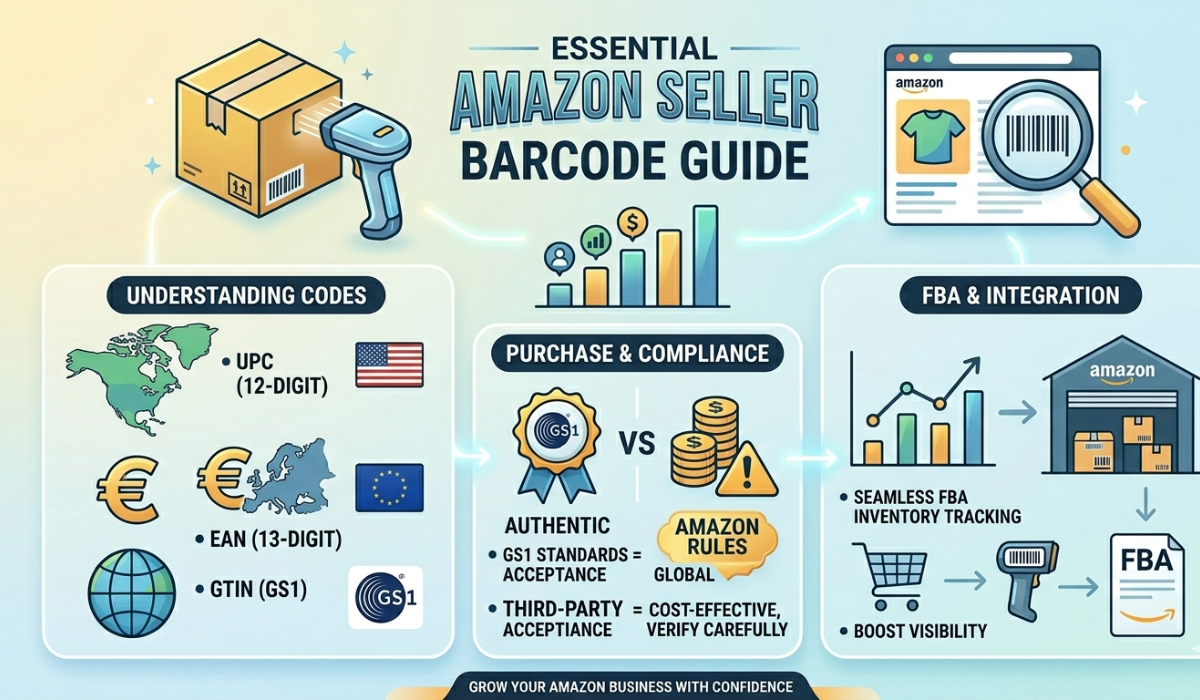
EAN, or European Article Number, is similar to UPC but often used in Europe. It typically includes 13 digits, unlike the 12-digit UPC.
Code 128 is another barcode type known for its compact design. It can encode large amounts of alphanumeric data, making it versatile for shipping.
Code 39 is popular in logistics and non-retail settings. It uses both numbers and letters, accommodating variable lengths.
Here's a quick comparison:
- UPC: 12 digits, retail focus.
- EAN: 13 digits, European markets.
- Code 128: Compact, alphanumeric.
- Code 39: Variable length, logistics.
Each barcode type serves unique needs, making them suitable for different industries and applications. Understanding their distinctions helps businesses choose the right system.
Troubleshooting: When a UPC Code Won’t Scan
UPC codes sometimes fail to scan, causing delays at checkouts. Identifying and fixing common issues is key to a smooth operation.
First, check for physical damage on the barcode. Scratches or smudges may obstruct scanning. Ensure the barcode is intact.
Lighting can also affect scanning. Adjust the lighting to reduce glare on shiny surfaces. Less glare can make a difference.
Here are common UPC scanning problems:
- Barcode Damage: Check for scratches or tears.
- Poor Lighting: Reduce glare and ensure adequate light.
- Scanner Issues: Clean the scanner lens.
If problems persist, review the scanner settings. Ensuring they're calibrated for UPC codes can help. Routine maintenance prolongs scanner life, reducing issues.
The Role of UPC Codes in Retail and Inventory Management
UPC codes are vital in retail for efficient operations. They speed up checkout times by automating the scanning process. This reduces human error and enhances customer satisfaction.
In inventory management, UPC codes track stock levels accurately. They help retailers monitor sales and anticipate restocking needs. This leads to better inventory turnover and less waste.
Key benefits of UPC codes in retail and inventory include:
- Quick Checkout: Faster, with fewer errors.
- Accurate Inventory: Real-time stock tracking.
- Data Insights: Analyze sales patterns effectively.
With UPC codes, retailers optimize their supply chain processes. They provide insightful data, driving informed decision-making. These codes are indispensable for modern retail and inventory strategies.
Key Takeaways and Best Practices
Understanding UPC codes enhances product handling in retail. It's vital for improving efficiency. Mastering how to read and interpret UPC codes is essential for retail operations.
Here are some best practices to follow:
- Proper Training: Ensure staff are trained in UPC scanning.
- Equipment Maintenance: Regularly check and maintain barcode scanners.
- Data Accuracy: Verify codes for accuracy and consistency.
Knowing how to decode and interpret UPC numbers aids in product authenticity checks. This knowledge can also streamline inventory audits. Employing these practices fosters better inventory control and customer service. Adapting to technological advancements in UPC systems ensures smooth operations. Stay updated and informed about UPC standards.
Conclusion
Understanding how to read a UPC code is crucial in today's retail landscape. It ensures efficient inventory management and accurate product handling.
Mastering the structure and interpretation of UPC codes empowers businesses and consumers alike. It facilitates smooth transactions and enhances the shopping experience. By staying informed and employing best practices, you can leverage UPC codes to their full potential. This knowledge not only supports business operations but also aids in making informed purchasing decisions. Stay proactive in learning and adapting to barcode technologies.