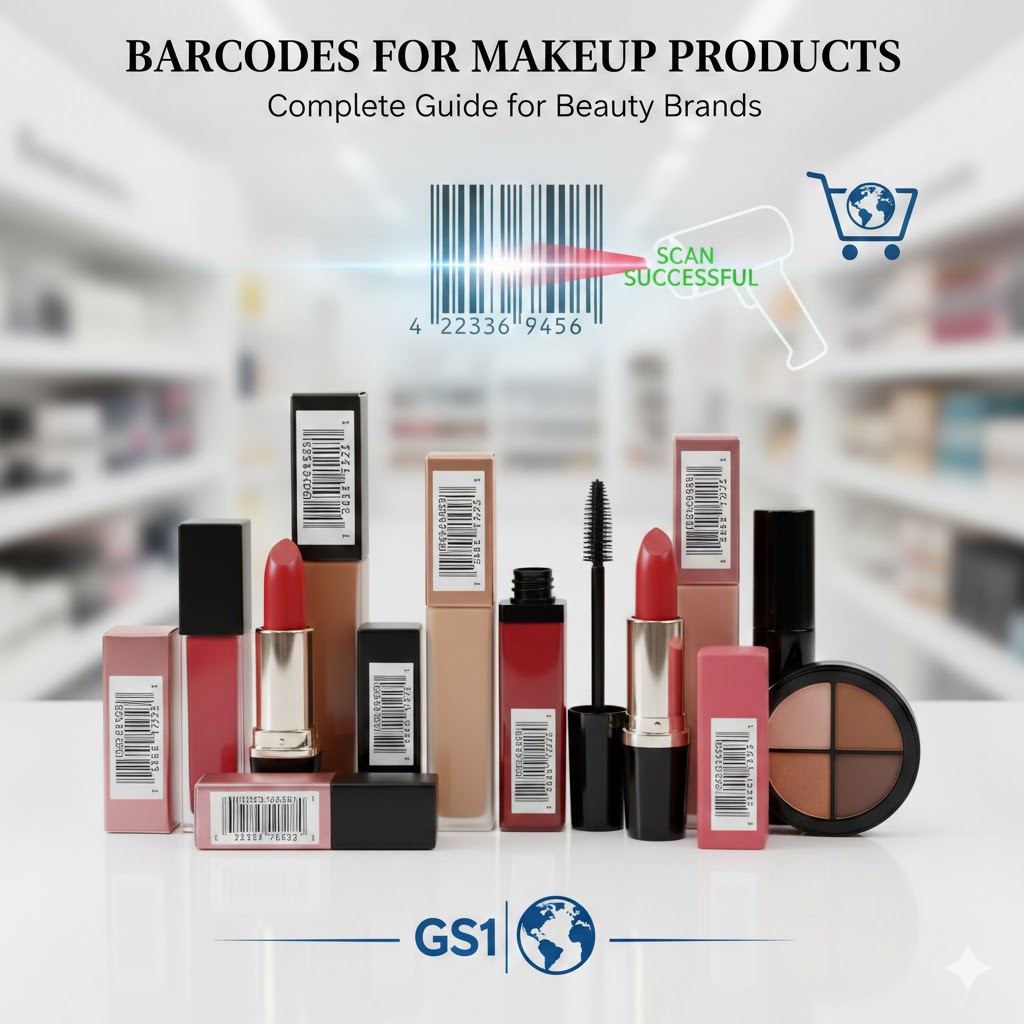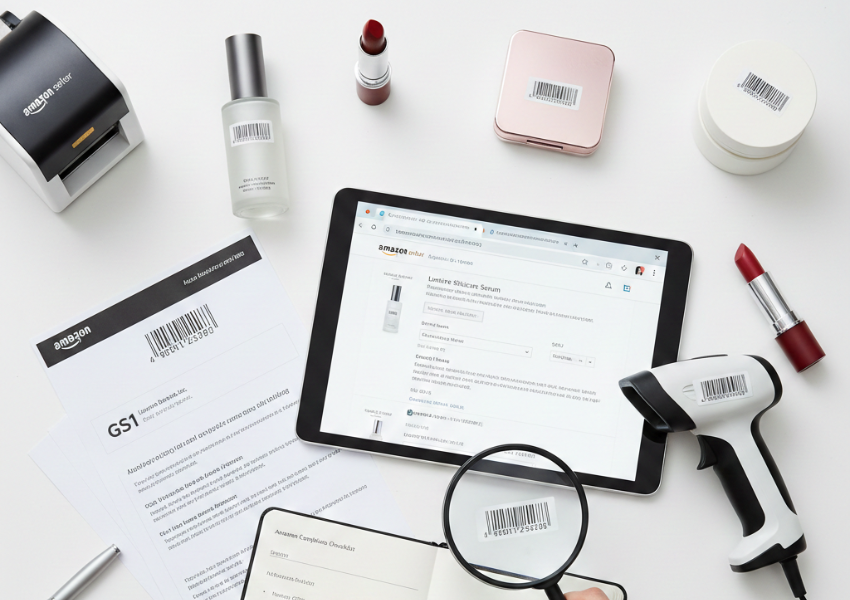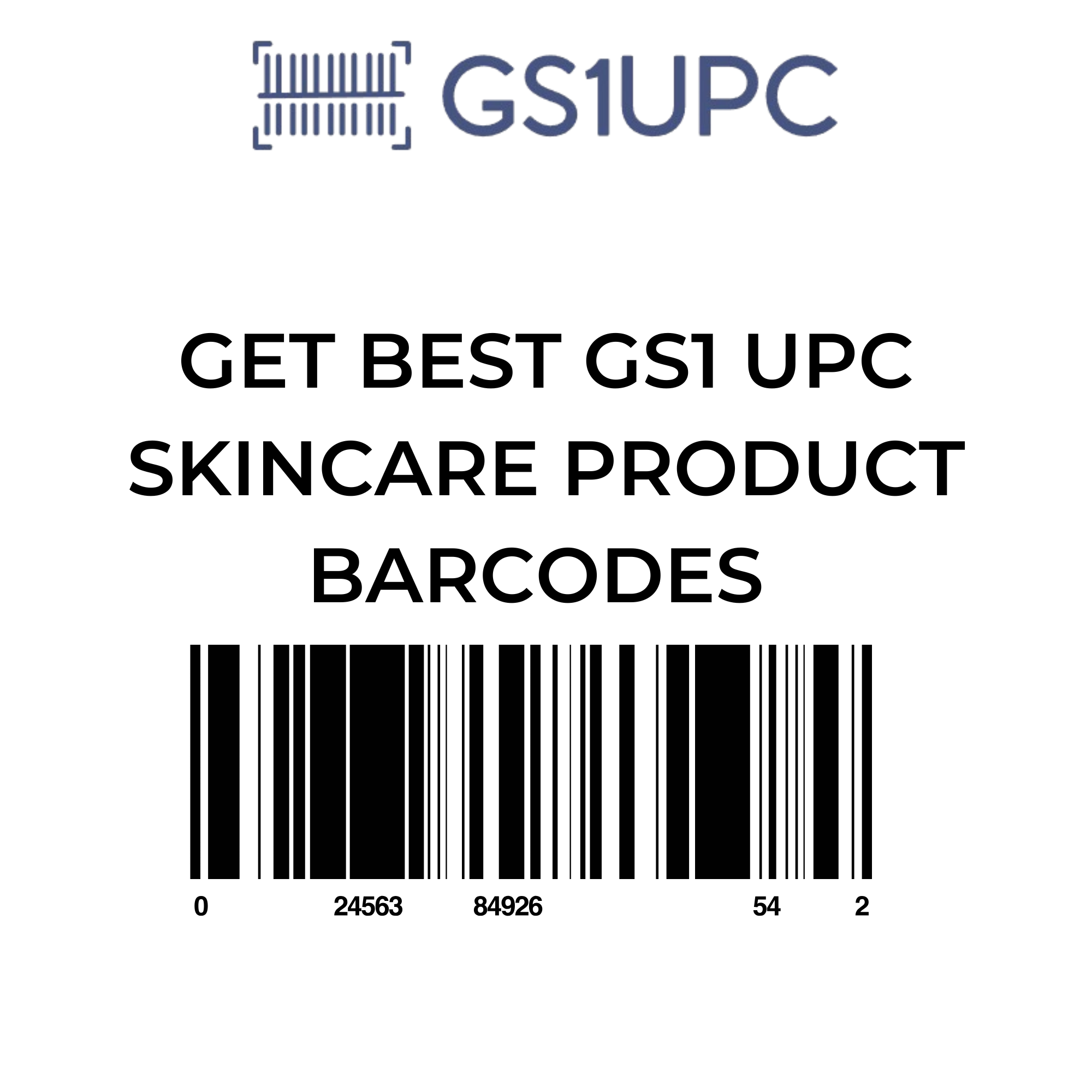
Offering the skincare items without proper barcodes could make the products fail to reach the retail stands or online shops. Since skincare products such as facial creams, serums, and lotions have to be scanned, tracked, and validated in the retail systems, each of them must have a barcode to identify.
This guide is focused on the functionality of cosmetic barcodes in actual selling situations and appropriate allocation of these identifiers.
Why Skincare Barcodes Matter in Retail & Online Sales
Barcodes will allow retailers and marketplaces to:
- Find skincare products immediately at the checkout
- Correlate products with approved brand information
- Track inventory in different locations
- Eliminate duplicate/fraudulent listings
Retailers or the platform like Amazon can reject skincare products without a valid barcode or flag them.
Accepted Barcode Types for Skincare Products
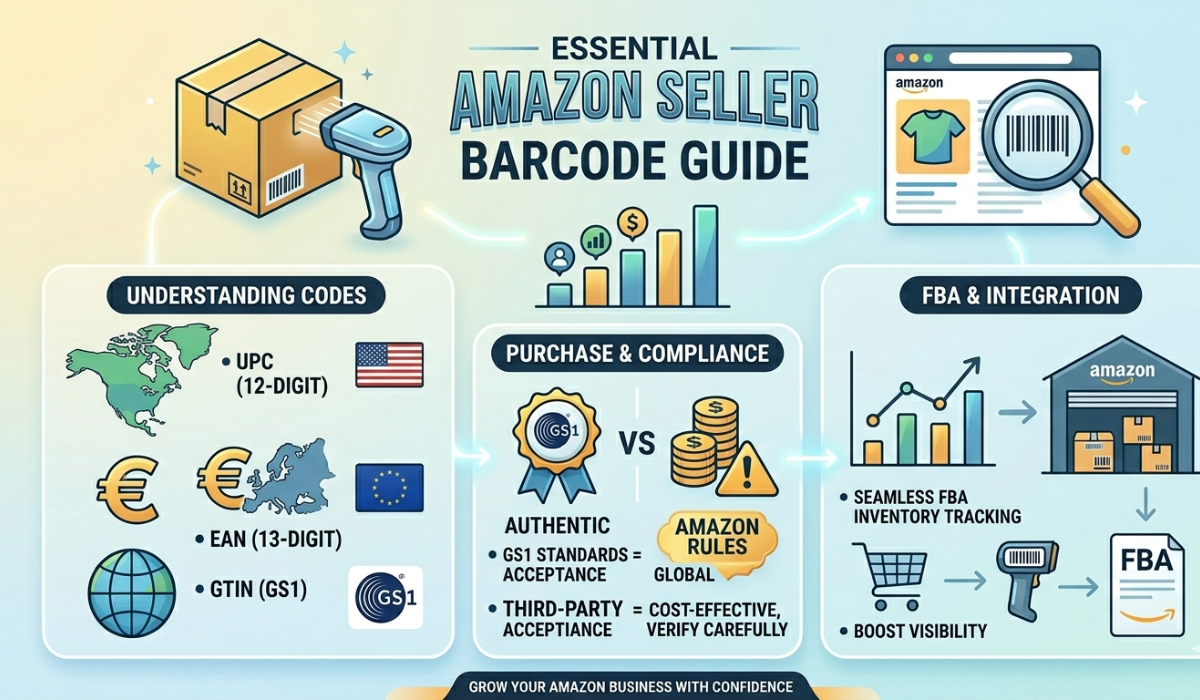
The barcodes for cosmetic that are used in skincare products are based on GS1 that is internationally accepted.
Examples of common barcodes formats are:
- UPC This is mainly used in Canada and the United States
- EAN Applied in Europe and other foreign markets
Each skincare product is identified globally by a GTIN coded in both of the formats.
When Skincare Products Require Separate Barcodes
Each distinct product under skincare should have its own barcode, which includes:
- Various bottle/jar sizes
- Formulation (or ingredient) changes
- Bundled skincare kits
- Low production or promotion
Example:
Facial serum 30 ml → one barcode
Facial serum 60ml → another barcode
Use of one bar code with different versions can cause a mismatch of inventory and listing mistakes.
GS1 Verification and Marketplace Acceptance
To ensure:Most major marketplaces match barcodes for cosmetic with the GS1 database.
- Brand ownership
- Product authenticity
- GTIN validity
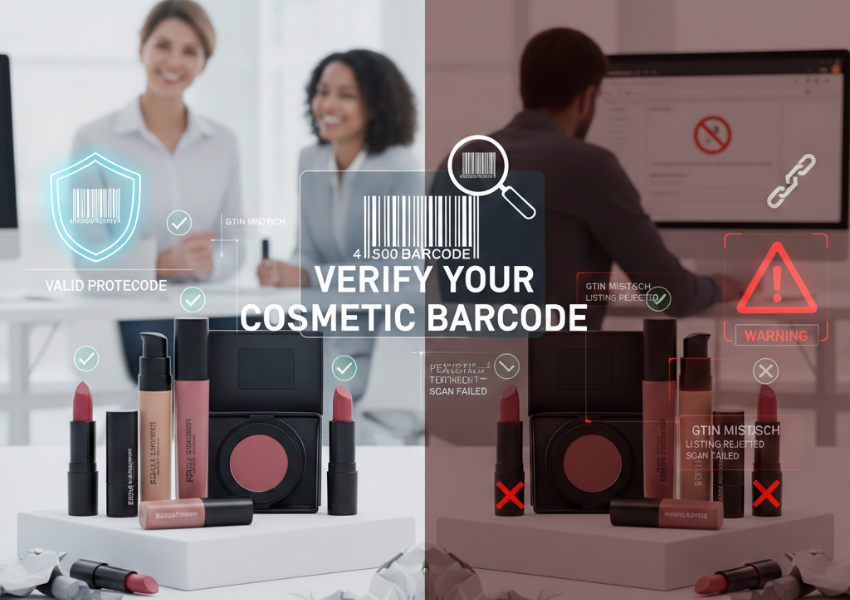
In case a barcode is not GS1 verified or is already under another brand, the listing of the product can be blocked or deleted.
Barcode Placement Tips for Skincare Packaging
Optimal positioning enhances success of scans:
- Flat non reflective areas should be used where possible
- Do not put barcodes around corners
- Have enough white space at the top of the barcode
- Have a high contrast of the bars and the background
Misplaced scans may lead to scans failure at point-of-sale systems.
Common Skincare Barcode Problems Brands Face
The common problems faced by the beauty brands include:
- Amazon or retailer rejection of barcode
- Duplicate GTIN errors
- Barcodes that are smaller than scanners
- Mismatch of product data with barcodes
These issues are normally due to improper barcode sourcing or reuse.
How Beauty Brands Get Skincare Barcodes
It is an easy procedure:
- 1. Determine all different skincare products and variations
- 2. Determine the location of selling the products (local or international)
- 3. Acquire UPC or EAN barcodes that are GS1 compliant
- 4. Each product should have a barcode
- 5. Label or barcode package
This process will guarantee compatibility in the long run between the retail and online platform.
Skincare Barcode FAQs
Can small or handmade skincare brands use barcodes?
Yes. Brands that are sold on retail or marketplaces must have proper barcodes.
Are barcodes mandatory for online skincare sales?
Yes, Because The majority of large marketplaces have GS1 verified barcodes on skincare products and these barcodes helps you to organise products accordingly.
Do bundled skincare sets need their own barcode?
Yes. Individual items are required to have different barcodes as compared to bundles.
Summary
The GS1 UPC barcodes for cosmetic products are necessary in the retailing business to enable efficient inventory management, quality market acceptance and proper inventory management. Valid GS1 compliant UPC or EAN barcodes are used to make sure that the makeup products are perfectly recognised and accepted irrespective of the location of sale. When beauty brands properly assign makeup barcodes, they do not have problems with listing and establish trust between the retailers and the consumers.