GS1 barcode compliance is an important requirement for cosmetic companies selling through online marketplaces and retailers. From makeup and skincare to beauty kits and cosmetic bundles, retailers depend on GS1 verified barcodes to verify product authenticity, ownership, and uniqueness.
This content explains what GS1 requires for cosmetic products, when GS1 barcodes are required, and how beauty brands can stay passive in 2026 and beyond.
What Is GS1 and Why It Matters for Cosmetics
GS1 UPC is the global organisation that sets standards for product identification. It manages the system behind:
- UPC barcodes
- EAN barcodes
- GTINs (Global Trade Item Numbers)
For cosmetic products, GS1 ensures that:
- Each product has a globally unique identifier
- Product data is linked to the correct brand owner
- Retailers can verify products in trusted databases
Without GS1 compliance, cosmetic products may be rejected or flagged by retailers and marketplaces.
Are GS1 Barcodes Mandatory for Cosmetic Products?
GS1 Cosmetic barcodes are not legally required to manufacture cosmetics, but they are commercially required in most selling stores.
You need GS1 compliant barcodes if you sell cosmetics through:
- Physical retail stores
- Pharmacies and beauty chains
- Amazon, Walmart, and major marketplaces
- International distributors or wholesalers
Most large retailers verify barcodes directly against the GS1 database, making GS1 compliance essential for market access.
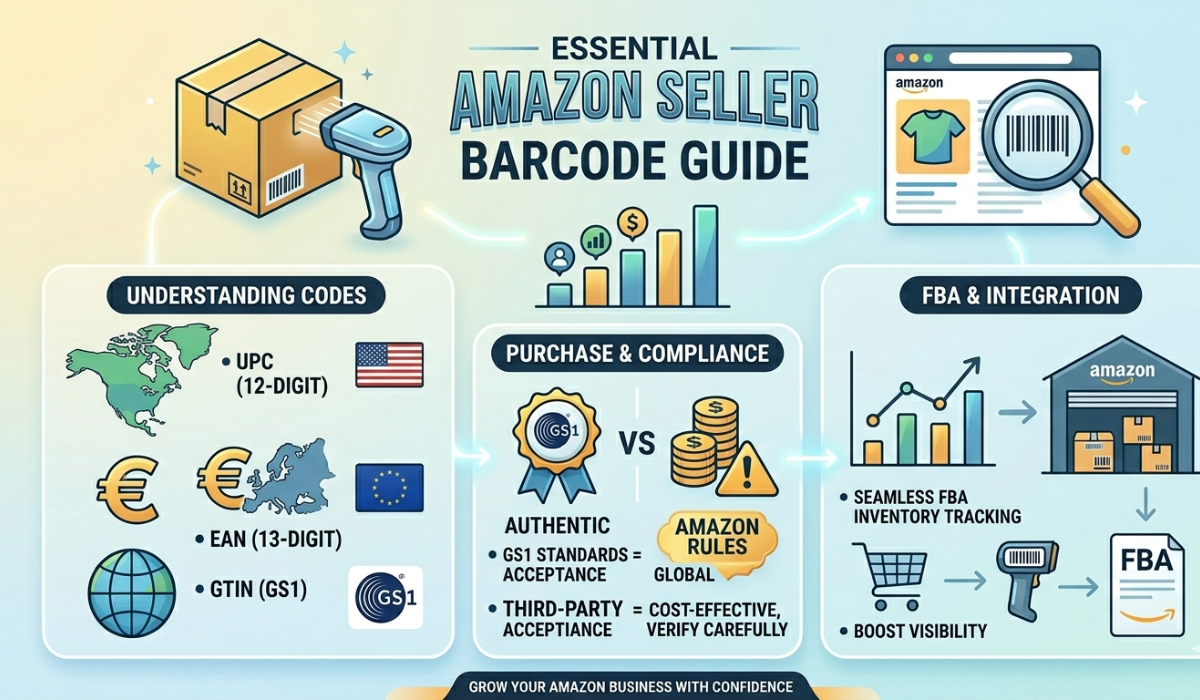
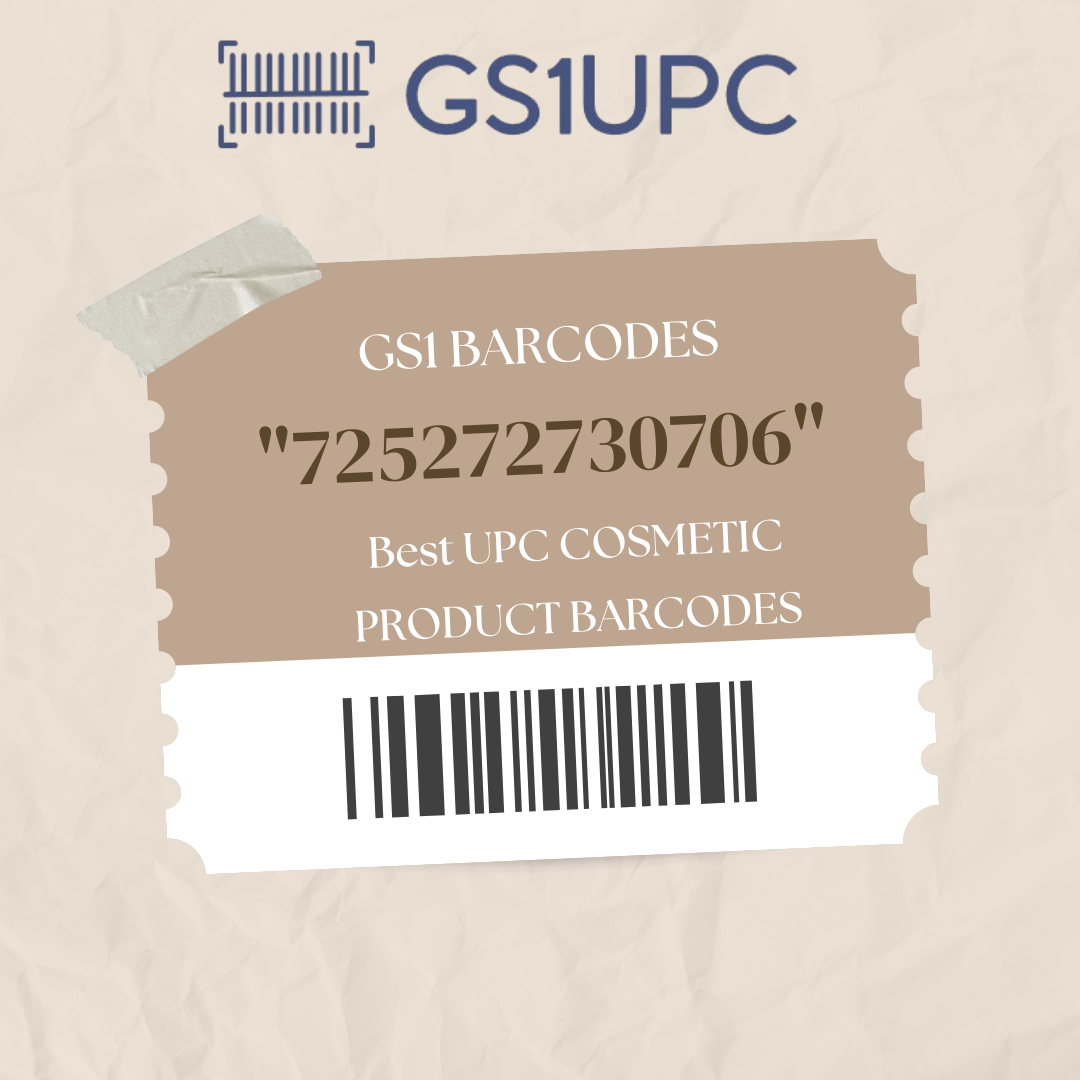
GS1 Barcode Types Used for Cosmetic Products
GS1 offers multiple barcode formats for cosmetics, depending on where the product is sold.
UPC Barcodes (GS1 Standard)
- Commonly used in the United States and Canada
- Widely accepted by North American retailers
- Used for individual cosmetic products
EAN Barcodes (GS1 Standard)
- Used in Europe, UK, Asia, and global markets
- Required for international cosmetic distribution
- Accepted by global beauty retailers
Both UPC and EAN barcodes encode a GTIN, which uniquely identifies each cosmetic product.
GS1 GTIN Rules for Cosmetic Products
A GTIN is the number behind the barcode. GS1 has strict rules on how GTINs are assigned to cosmetics.
A new GTIN is required when:
- The cosmetic product changes in size or volume
- The formulation or ingredients change
- The packaging type changes
- A cosmetic bundle or set is created
- A new shade, color, or variant is introduced
Each GTIN must represent one specific cosmetic product, not a product range.
Cosmetic Product Variations and GS1 Compliance
Cosmetic brands often sell multiple variations of the same product. Under GS1 rules:
Each of the following requires a separate GS1 barcode:
- Different shades (lipstick colors, foundation tones)
- Different sizes (30 ml vs 50 ml)
- Limited editions
- Gift sets or promotional bundles
Reusing the same GS1 barcode for multiple variations violates GS1 standards and can lead to listing errors or product delisting.
GS1 Barcode Verification by Marketplaces
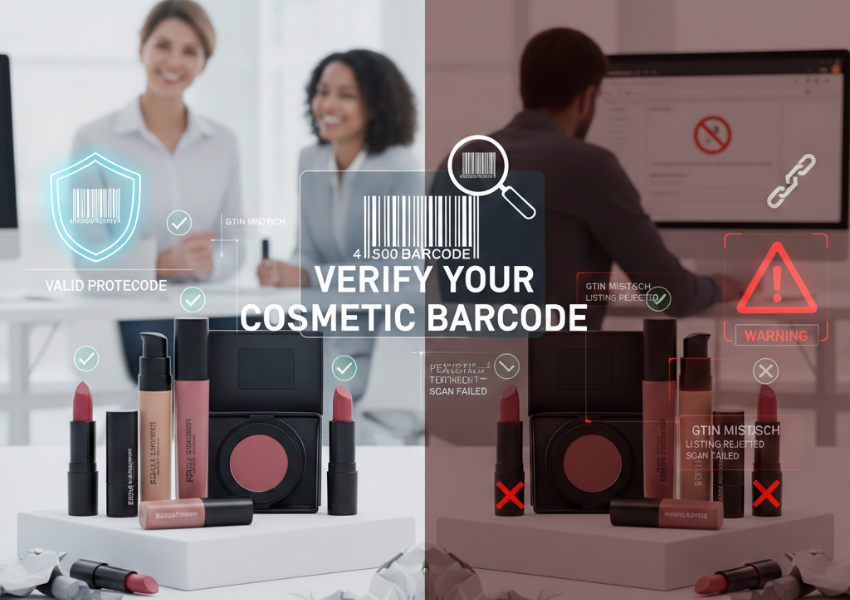
Marketplaces increasingly rely on GS1 barcode validation to prevent fake and duplicate listings.
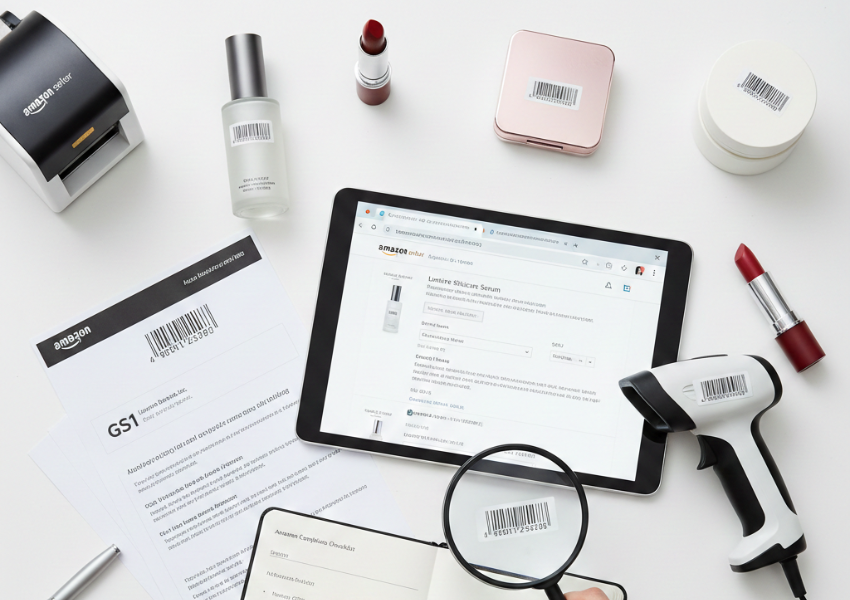
Platforms like Amazon verify:
- Whether the GTIN exists in GS1 databases
- Whether the brand name matches the barcode owner
- Whether the barcode has been used previously
If a cosmetic barcode fails verification, the listing may be rejected or suspended.
GS1 Barcode Placement Requirements for Cosmetics
GS1 also provides guidance on barcode placement to ensure scannability.
Best practices include:
- Placing the barcode on flat packaging surfaces
- Avoiding folds, seams, and curved edges
- Maintaining adequate quiet zones (white space)
- Using high-contrast printing
Improper placement can cause scanning failures at point-of-sale systems.
Common GS1 Compliance Mistakes Cosmetic Brands Make
Many cosmetic brands face issues due to:
- Using non GS1 or recycled barcodes
- Purchasing barcodes not registered to their brand
- Assigning one barcode to multiple cosmetic variants
- Uploading incorrect GTIN data to marketplaces
These mistakes often result in barcode rejection, listing delays, or retailer refusal.
How Cosmetic Brands Can Stay GS1 Compliant
To maintain GS1 compliance:
- Identify every unique cosmetic product and variation
- Assign one GTIN per product
- Use GS1-compliant UPC or EAN barcodes
- Keep product data consistent across platforms
- Update GTINs when products change
Following these steps ensures long-term retail and marketplace compatibility.
Final Takeaway
Cosmetic brands that are hoping to sell both in retail and online platforms must comply with GS1 barcode standards to do it with confidence. Using valid GS1 compliant UPC or EAN barcodes, proper assignment of GTINs, and GS1 compliance, a makeup and skincare brand protects itself and prevents the expensive listing issues. GS1 compliance is not a luxury, but it is a necessity to be successful in the beauty industry in the long term.
Frequently Asked Question:
Q1: What type of barcode is used for cosmetics?
Answer: The UPC A barcode is the most-used barcode in America, the UPC E, a type of the UPC A, is commonly used on small cosmetic packages, lipsticks, concealers, mascara, etc. The UPC E barcode contains just six digits instead of 12.
Q2: How to get a barcode for cosmetic products?
Answer: To get a barcode for cosmetic products, register with GS1UPC.NET, obtain a Global Trade Item Number (GTIN), and use barcode generation software to create and print the barcode.
Q3: How do you legally label cosmetics?
Answer: A cosmetic barcode label must bear a declaration of each ingredient in descending order of predominance, except that fragrance and flavor may be listed as fragrance or flavor.