The selection of the right format of barcode labels for clothing is a critical issue to apparel brands. The chosen barcode determines the acceptance of the retail, approvals in the market, accuracy and scalability in the future. Many apparel companies are facing listing losses or business problems merely because they have chosen the wrong barcode format at an early phase.
This guide provides the methodology of choosing the appropriate barcode format of the apparel, UPC, EAN, QR code, and RFID comparisons based on the real retail and marketplace needs.
Why Barcode Format Selection Matters in Apparel
Clothing products are sold across multiple channels: physical retail, online marketplaces, distributors, and international markets. Each channel may recognize specific barcode formats.
Choosing the right format helps brands:
- Avoid retailer rejections
- Ensure global scan compatibility
- Manage product variations correctly
- Prepare for long-term growth
A wrong choice can limit where and how your clothing products can be sold.
UPC Barcodes for Clothing Brands
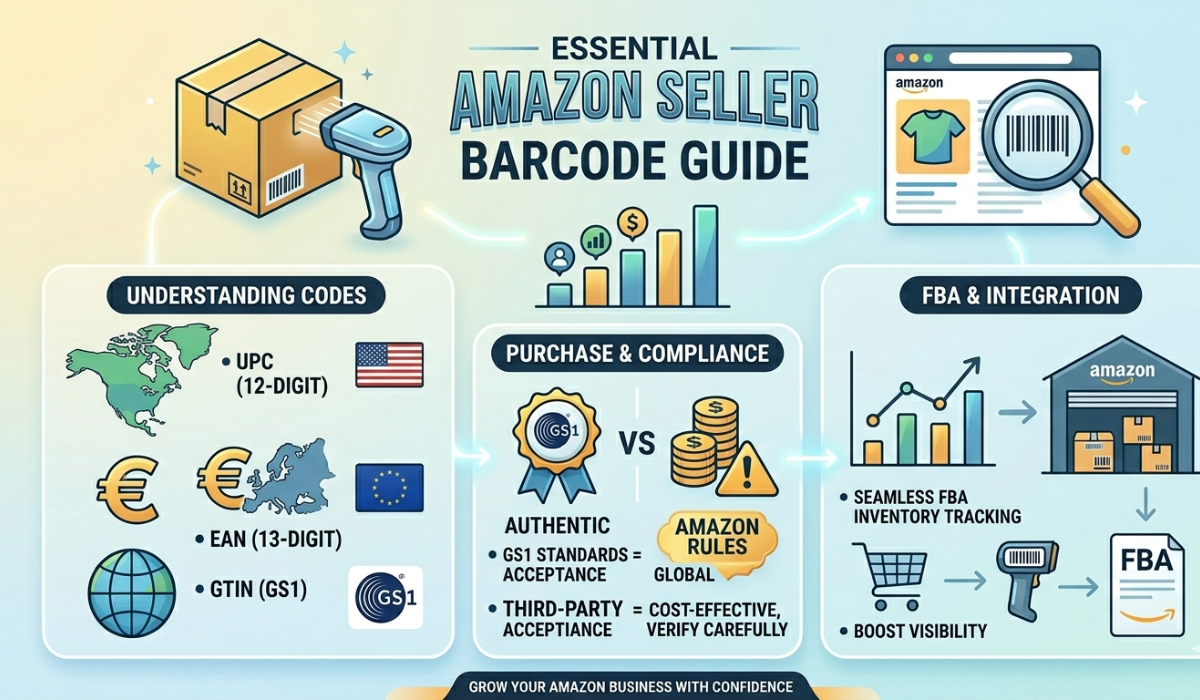
UPC (Universal Product Code) is one of the most widely used barcode formats in apparel retail.
When UPC Is the Right Choice
- Selling clothing in the United States or Canada
- Working with physical retail stores
- Listing products on major online marketplaces
- Managing standard retail checkout systems
Key Characteristics
- 12-digit numeric code
- Fast and reliable POS scanning
- Recognized by most North American retailers
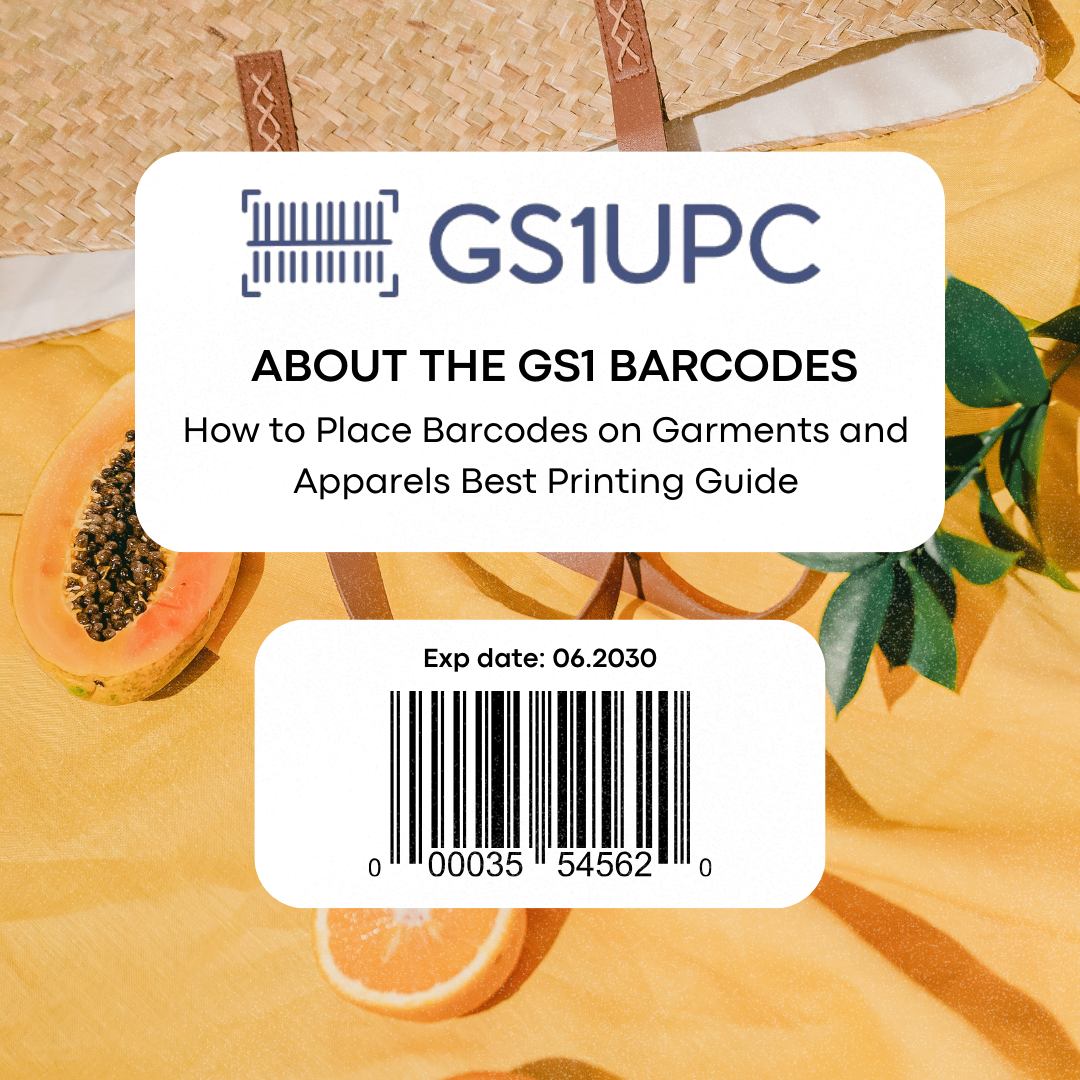
GS1 UPC barcodes are ideal for brands starting with domestic retail distribution.
EAN Barcodes for International Clothing Sales
EAN (European Article Number) is the global equivalent of UPC and is commonly used outside North America.
When EAN Is the Right Choice
- Selling clothing internationally
- Exporting garments to Europe, Asia, or the Middle East
- Working with global distributors
Key Characteristics
- 13 digit numeric code
- Globally accepted retail format
- Compatible with international POS systems
EAN barcodes are best for brands planning cross-border or global expansion.
QR Codes in the Clothing Industry
QR codes are increasingly used in fashion, but they serve a different purpose than retail barcodes.
Best Uses for QR Codes
- Product information pages
- Size guides and care instructions
- Sustainability and sourcing details
- Brand engagement and marketing
Limitations
- Not accepted as primary retail barcodes
- Not suitable for POS checkout
- Cannot replace UPC or EAN for sales
QR codes work best as supplementary labels, not replacements.
RFID Tags for Advanced Apparel Tracking
RFID (Radio Frequency Identification) is used by large fashion retailers for automation and inventory control.
Where RFID Makes Sense
- High volume apparel operations
- Large retail chains
- Automated warehouses
- Loss prevention systems
Considerations
- Higher implementation cost
- Requires specialized hardware
- Not mandatory for most small brands
RFID is powerful but typically adopted after a brand scales, not at launch.
Matching Barcode Formats to Clothing Variations
Each unique clothing variation requires its own barcode, regardless of format.
This includes:
- Size changes
- Color changes
- Style or fit changes
For example:
- A medium blue shirt needs a different barcode than a large blue shirt
- The same design in a different color requires another code
Barcode formats identify products they do not manage variations automatically.
Common Mistakes Clothing Brands Make with Barcode Formats
Many apparel brands struggle due to:
- Using QR codes instead of retail barcodes
- Mixing UPC and EAN inconsistently
- Reusing barcodes across variations
- Selecting formats without checking retailer requirements
These mistakes can cause listing errors and inventory mismatches.
How to Decide the Best Barcode Format for Your Brand
Quick decision guide:
- US retail → UPC
- Global retail → EAN
- Customer engagement → QR (secondary)
- Large-scale automation → RFID
Frequently Asked Questions (User-Focused & Google-Style)
What barcode format is best for clothing products?
UPC or EAN barcodes are best for clothing products, depending on whether you sell domestically or internationally.
Can I use QR codes instead of UPC for clothing?
No. QR codes are not accepted as primary retail barcodes for clothing checkout systems.
Do different clothing sizes need different barcodes?
Yes. Each size and color variation requires a unique barcode.
Is RFID required for clothing brands?
No. RFID is optional and mainly used by large retailers with advanced inventory systems.
Can one barcode be used across multiple marketplaces?
Yes, as long as the barcode is valid, unique, and matches the product data across platforms.
Final Thoughts
Choosing the right barcode format ensures that clothing products scan correctly, meet retailer requirements, and scale smoothly as a brand grows. UPC and EAN remain the backbone of apparel retail, while QR and RFID support marketing and advanced tracking. Learn more about the types of barcodes and get more accurate and efficient barcodes for your clothing business.