A Complete 2026 Guide for Beauty Brands
When launching or selling cosmetic products whether makeup, skincare, haircare, or perfume one question almost all beauty brands ask is:
Do my products need GS1 barcodes, or will a standard UPC/EAN work?
Choosing the wrong barcode cosmetic strategy can delay your launch, cause retailer rejections, trigger Amazon listing issues, or even lead to inventory mismanagement. In this guide, you’ll get clear answers, practical steps, and real world compliance guidance to help your beauty products succeed across marketplaces and retail channels.
What Are GS1 Barcodes, UPC, and EAN? (And Why It Matters)
Before answering the core question, it’s essential to understand what the different barcode systems mean.
GS1 The Global Standard
GS1 is the global organization that assigns unique product identifiers and manages the database all major retailers and marketplaces rely on to verify barcodes. When you buy GS1 barcodes, you get a GTIN (Global Trade Item Number) that’s truly unique and registered to your brand.
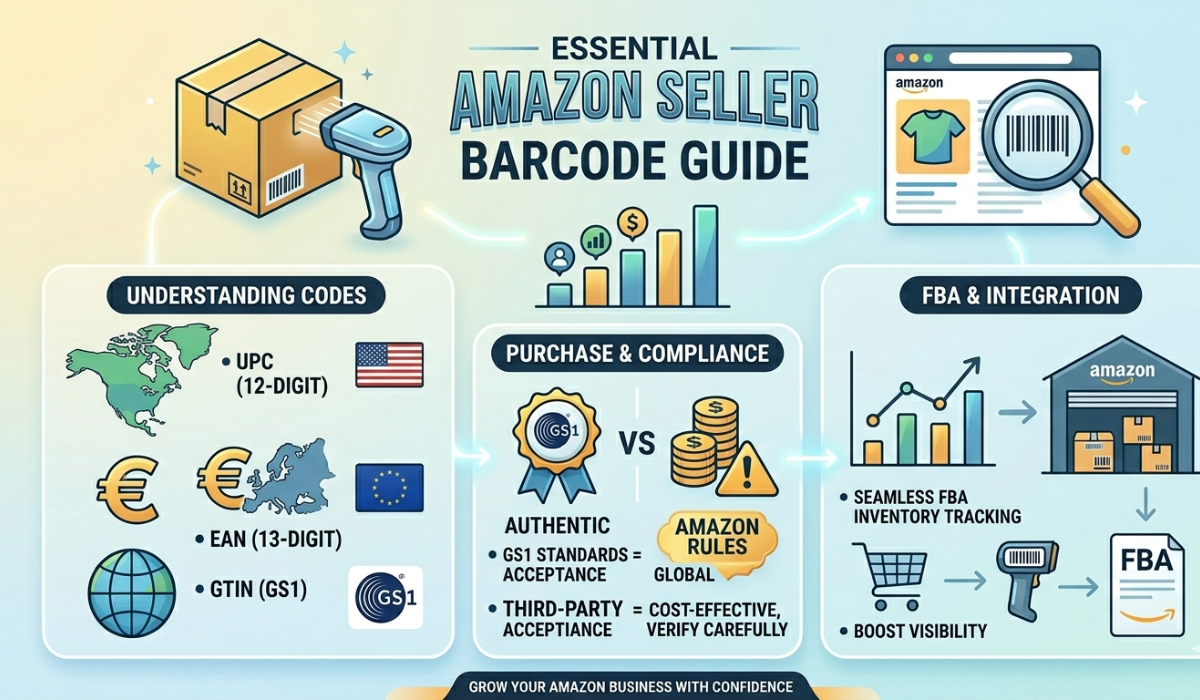
UPC Standard in North America
A UPC (Universal Product Code) is a 12-digit barcode format used primarily in the US and Canada. UPC is basically a type of GTIN when it’s issued by GS1.
EAN Standard in Global Markets
An EAN (European Article Number) is a 13-digit barcode used in Europe, Asia, and most international markets. Like UPC, when it’s GS1-issued, it’s a GTIN.
In short:
UPC and EAN are barcode formats, but GS1 is the authority that issues GTINs that are globally accepted and verified.
Do Cosmetic Products Need GS1 Barcodes?
Yes in Most Selling Situations Cosmetic products do need GS1 compliant barcodes if you plan to sell them through:
- Major online marketplaces (Amazon, Walmart, eBay)
- Physical retail stores
- International export markets
- Retail partner distribution systems
Retailers and marketplaces typically do not just want “a beauty barcode” they want a GS1-verified GTIN linked to your brand. You can also read the barcode requirements for amazon.
Why? Because GS1 provides:
- Global uniqueness
- Brand ownership verification
- Standardized data across platforms
- Scan ability at POS and in inventory systems
Without GS1 registration, your barcode may scan technically, but it won’t be legitimately linked to your product and brand in the systems that matter.
In simple terms:
You can use UPC/EAN formats but they must come from GS1.
You shouldn’t use cheap or resold barcodes that aren’t GS1-registered.
You shouldn’t expect retail systems to accept barcodes not verified against the GS1 database.
When GS1 Barcodes Are NOT Mandatory
There are a few very limited exceptions where you might not strictly need GS1 barcodes:
1. Small Direct to Consumer Brands
If you only sell on your own website or through small local channels that don’t use advanced inventory/POS scanning, some retailers might accept your own SKU system.
2. GTIN Exempt Amazon Listings
Amazon sometimes grants GTIN exemptions for certain handmade or bespoke products but this is rare in cosmetics because:
- Beauty products usually require standardized identification
- Amazon prefers GTIN tracking for returns, promotions, and inventory analytics
Even with exemption, such listings can limit growth potential and retail acceptance.
Why GS1 Compliance Is Important (Not Just a Form Requirement)
Getting a GS1 barcode isn’t just paperwork it unlocks key business capabilities:
Retailer Acceptance
Large retailers often require scans at POS, inventory systems, and logistics and they use GS1 databases to validate product IDs.
Online Marketplace Verification
Platforms like Amazon cross reference UPC/EAN against GS1 records to confirm brand ownership and prevent counterfeit listings.
Global Selling & Export
EAN/GS1 barcodes are needed for international markets (EU, UK, Asia). Without GS1 registration, export can be blocked or delayed.
Inventory Tracking & Safety
Barcodes are also used for inventory tracking, sales forecasting, and even product recalls helping protect both brand and consumer safety.
Real Problems Without GS1 Barcodes (And Why Cheap Barcodes Fail)
Many brands try shortcuts like buying barcodes from third-party resellers or using “cheap barcode packs.” While these may initially work, they often cause major issues later:
Brand Name Mismatch
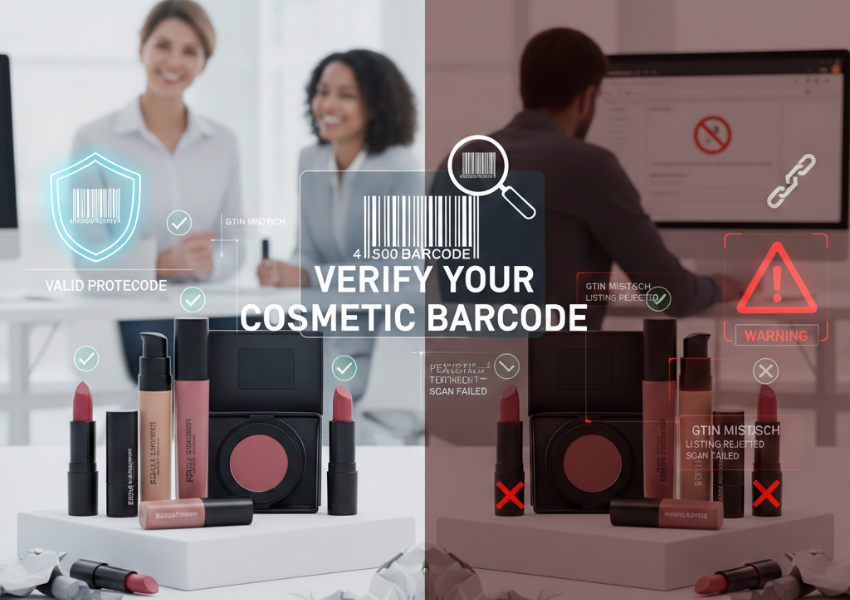
Third-party barcodes might show a different company name in the GS1 database. Retailers (especially Amazon) flag this and reject listings.
Recycled Barcodes
Codes previously used by another product retain their original registry info causing conflicts and listing errors.
Market Rejection
Some retailers requiring GS1 membership for compliance reseller barcodes may be rejected outright.
These problems typically cost far more in time and revenue than buying official GS1 barcodes in the first place.
How GS1 Barcode Registration Works for Cosmetic Brands
To get proper barcodes for cosmetic products, you typically follow these steps:
Step 1: Obtain a GS1 Company Prefix
This prefix becomes the foundation of all your GTINs.
Step 2: Assign GTINs to Each Product
Every variation, shade, size, fragrance, bundle gets its own GTIN.
Step 3: Generate UPC/EAN Barcodes
Use your GTIN to create printable UPC/EAN symbols for packaging.
Step 4: Print on Packaging
Ensure scan ability and compliance with label size and placement standards.
How Many Barcodes Do You Need for Cosmetic Products?
The number you need depends on how many unique SKUs you have. Each of the following requires its own barcode:
- Different shades of lipstick
- Different sizes of skincare bottle
- Multiple fragrance variants
- Product bundles or kits
- Special editions or seasonal sets
Reuse of the same barcode across variations can trigger listing rejection, inventory miscount, and marketplace conflicts.
GS1 Barcode vs. UPC/EAN What’s the Real Difference?
When choosing a barcode for cosmetic products, it’s important to understand the difference between GS1-registered GTINs, UPC, and EAN codes. A GS1 GTIN is an officially registered and globally unique product identifier that is accepted by major retailers and online marketplaces worldwide. UPC (GTIN-12) is the standard barcode format commonly used in the United States and Canada, while EAN (GTIN-13) is widely used across Europe, the UK, and many international markets.
Both UPC and EAN are valid barcode formats but they must be issued and registered through GS1 to ensure legitimacy. Non-GS1 reseller barcodes may appear functional, but they are often not linked to your brand in the global registry, which can result in retailer rejection, listing errors, or marketplace compliance issues.
Amazon’s Verification & Brand Registry Updates (2026)
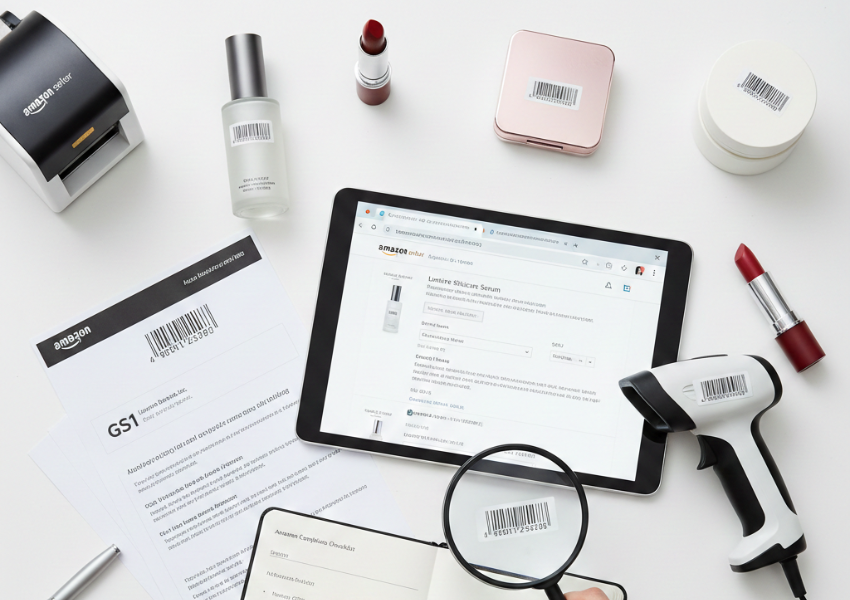
Amazon doesn’t just scan barcodes, it validates GTINs against GS1 records.
When you submit a UPC/EAN during listing creation, Amazon checks that:
- The barcode exists in the GS1 database
- The registered brand name matches your listing
- The GTIN is unique to your product
Mismatch errors can lead to:
- Listing suppression
- Delay in approval
- Account compliance flags
Important 2026 update: Amazon is increasingly requiring proper barcode ownership if you're shipping to FBA especially if you’re a brand owner under Brand Registry.
FAQs People Search About GS1 & Cosmetic Barcodes
Do GS1 barcodes cost money?
Yes GS1 barcodes typically involve registration fees and, in some regions, annual renewal fees.
Can I use a barcode from a reseller?
Technically it may scan, but if it's not GS1-registered you risk rejection by Amazon and major retailers.
Is one barcode enough for all product sizes?
No, each variation (shade, size, scent) needs its own unique GTIN.
Does Sephora or Ulta require GS1?
Major beauty retailers often require GS1 barcode compliance to accept suppliers.
Can I sell without a barcode on my own website?
Yes, but if you want to scale into retail or marketplaces, GS1 barcodes become essential.
Final Thoughts: GS1 Barcodes Are Your Cosmetic Brand’s Passport
Barcodes for cosmetic products are not just labels; they are your brand’s global identity in retail and online marketplaces.
While UPC and EAN are valid barcode types, the critical factor is that they must be GS1-registered to be accepted by modern retail systems and platforms like Amazon, Walmart, or Sephora.
Investing in official GS1 barcodes may cost more upfront than reseller codes, but it avoids listing problems, rejections, and operational headaches down the road. In the beauty and cosmetics industry where variations, shades, and packaging diversity are the norm, having proper GS1 barcode compliance is not optional; it's foundational.