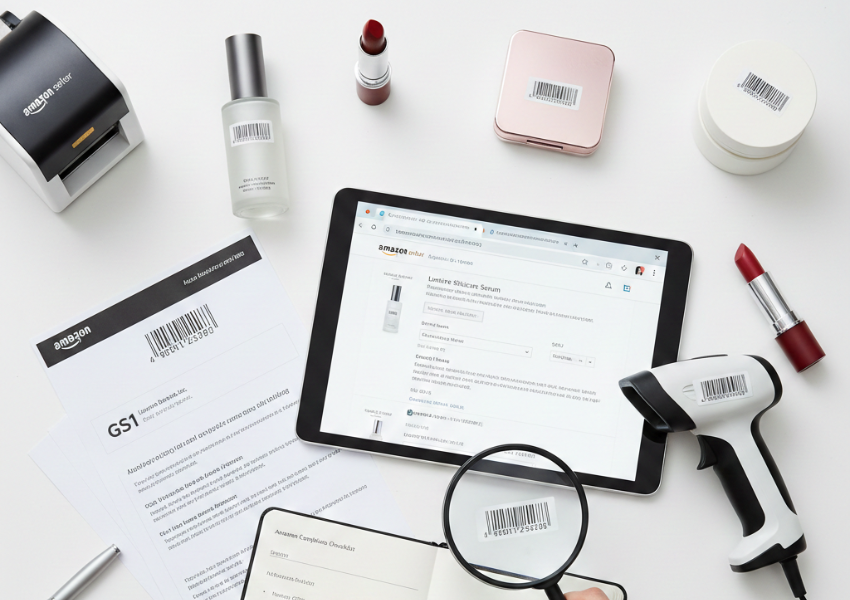
Running a successful online store requires more than listing products and processing orders. As your Shopify business grows, managing inventory, tracking sales, and expanding to multiple sales channels becomes increasingly complex. This is where product barcodes such as UPC, EAN, and GTIN become essential.
Barcodes are not just technical identifiers; they are a global product identification system used by retailers, warehouses, marketplaces, and point-of-sale systems. When Shopify products are assigned proper barcodes, businesses can manage inventory accurately, integrate with retail systems, and sell products across major marketplaces like Amazon, eBay, and Walmart.
For Shopify store owners who want to scale beyond a small online store, barcodes are a critical part of professional product management.
The Role of Product Barcodes in Modern Ecommerce
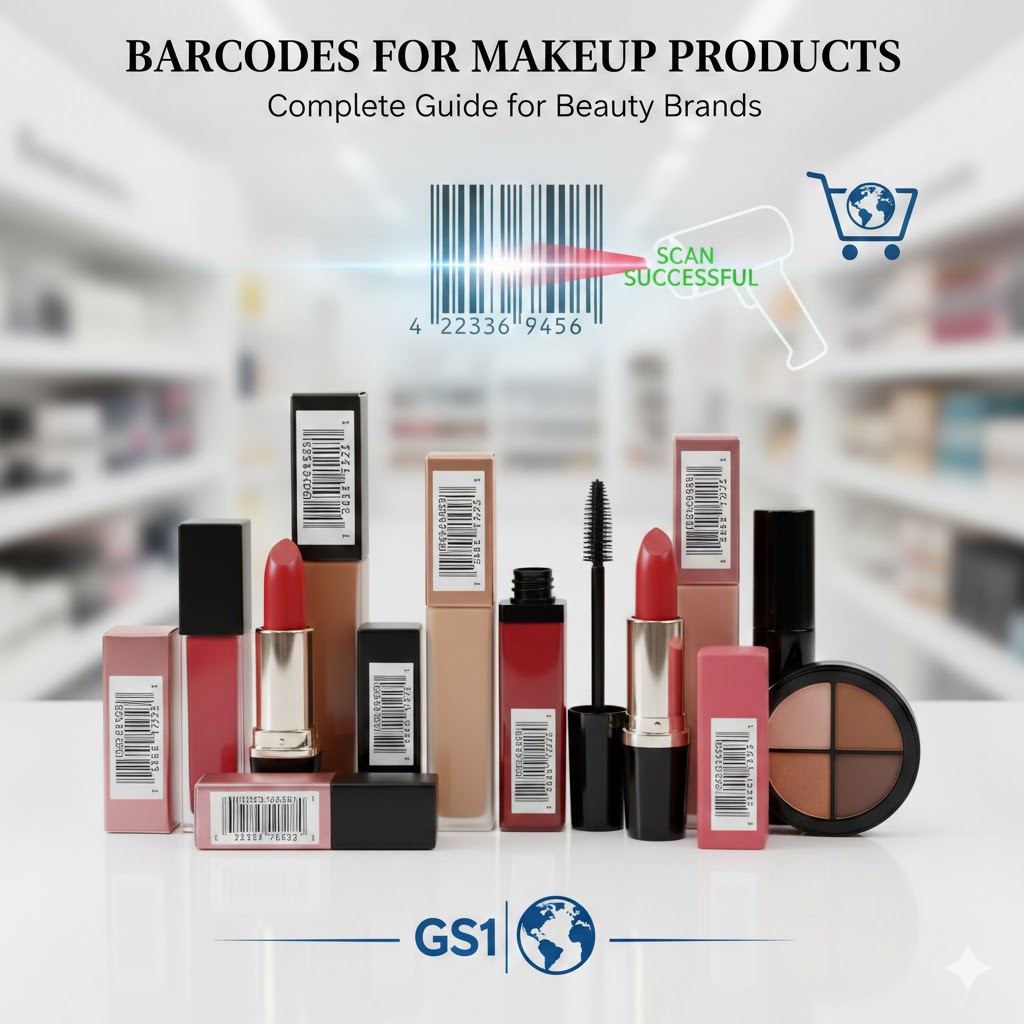
A GS1 barcode is a machine-readable code that represents a unique product identifier. These identifiers are typically known as GTINs (Global Trade Item Numbers) and are issued through the global standards organization GS1.
Each barcode uniquely identifies a product, allowing it to be recognized across supply chains, retail stores, and ecommerce platforms worldwide.
In ecommerce systems like Shopify, barcodes help connect products to:
- Inventory tracking systems
- POS (Point-of-Sale) devices
- Retail checkout scanners
- Marketplace product databases
- Warehouse management software
Without a unique barcode, scaling product operations across these systems becomes difficult.
Why Shopify Stores Use Barcodes for Product Management
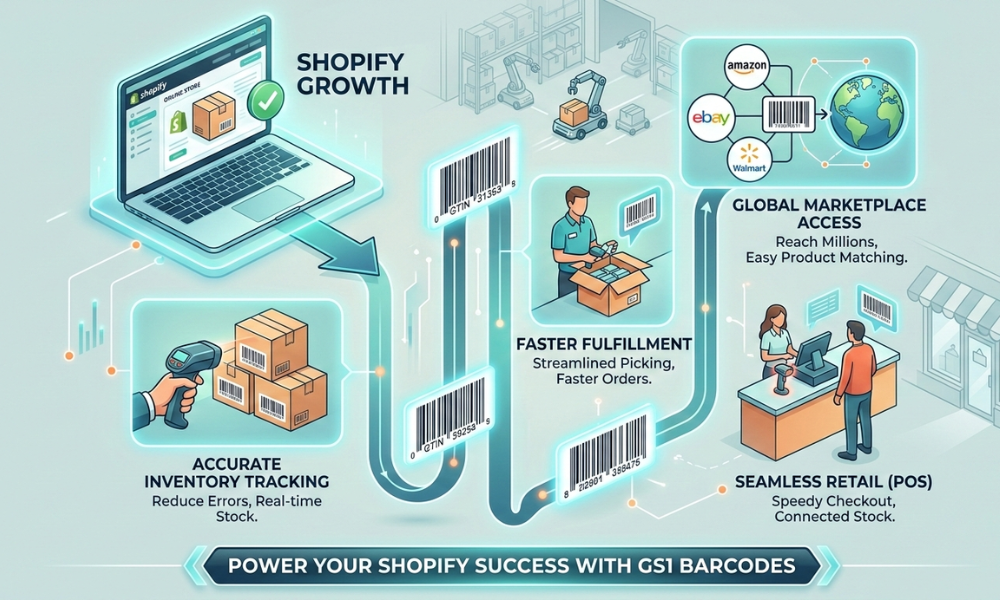
Many successful Shopify brands rely on barcodes to streamline operations and prepare for multichannel selling. A properly assigned barcode allows each product to be identified quickly and accurately across different systems.
Accurate Inventory Tracking
Inventory errors are one of the biggest challenges in ecommerce businesses. Barcodes reduce manual entry and improve stock accuracy.
With barcode-based tracking, Shopify stores can:
- Scan products when receiving stock
- Track inventory movements in real time
- Reduce human error during stock updates
- Maintain accurate product availability
This becomes especially important for stores managing large product catalogs or multiple product variants.
Faster Product Processing
Barcodes significantly speed up daily business operations.
Instead of manually searching for products, staff can simply scan the barcode to:
- Add products to orders
- Update inventory counts
- Process returns
- Manage stock transfers
For businesses processing dozens or hundreds of orders daily, this can save hours of operational work.
Essential for Shopify POS Retail Stores
If a Shopify store expands into physical retail locations, barcodes become even more important.
Shopify POS allows retailers to scan products directly at checkout using barcode scanners.
This enables:
- Faster checkout experience
- Accurate product pricing
- Automatic inventory updates
- Simplified retail operations
Retail stores worldwide rely on barcode scanning because it reduces checkout time and improves customer experience.
Barcodes Enable Marketplace Expansion
One of the biggest growth opportunities for Shopify stores is selling products on multiple marketplaces.
Major ecommerce platforms rely on GTIN based product identification systems to match products with their global catalogs.
Examples include:
- Amazon
- eBay
- Walmart
These marketplaces use barcodes to identify products, prevent duplicates, and connect listings with their existing product databases.
When Shopify products already have valid barcodes, expanding to these platforms becomes much easier.
Supporting Product Variants and Catalog Organization
Many Shopify stores sell products with multiple variations such as:
- Size
- Color
- Flavor
- Packaging type
Each variation should have its own unique barcode so it can be tracked individually.
For example:
A skincare brand selling face cream might have:
- 50ml jar
- 100ml jar
- Travel-size bottle
Each variation requires a separate barcode to ensure accurate inventory tracking and order fulfillment.
Barcodes ensure that every variant is uniquely identified, preventing confusion during packaging and shipping.
Improving Warehouse and Fulfillment Efficiency
As ecommerce businesses grow, many move toward warehouse fulfillment systems.
Warehouse operations rely heavily on barcode scanning for:
- Receiving incoming stock
- Picking products for orders
- Packing shipments
- Managing inventory locations
Barcode based fulfillment reduces picking errors and speeds up order processing.
For Shopify brands using fulfillment partners or third-party logistics providers (3PLs), barcodes often become a standard requirement.
Strengthening Product Data Consistency
One of the biggest advantages of barcode systems is data consistency across platforms.
Each barcode is linked to a specific product in a global product database. This ensures that product information remains consistent across:
- Online stores
- Retail systems
- Warehouse software
- Marketplaces
Consistent product identification prevents duplicate listings, incorrect product mapping, and catalog confusion.
Preparing Your Shopify Store for Retail Distribution
Many Shopify brands eventually expand into retail distribution, selling products in physical stores such as supermarkets, pharmacies, or specialty retailers.
Retail chains require barcodes because they are used in:
- Checkout scanners
- Inventory systems
- Shelf labeling systems
- Product databases
Without barcodes, products cannot be easily integrated into retail store systems. Barcodes therefore act as a bridge between ecommerce and traditional retail distribution.
The Importance of Globally Recognized Barcode Standards
For professional ecommerce operations, barcodes should follow internationally recognized standards. These standards ensure that product codes are unique and compatible with retail and marketplace systems worldwide.
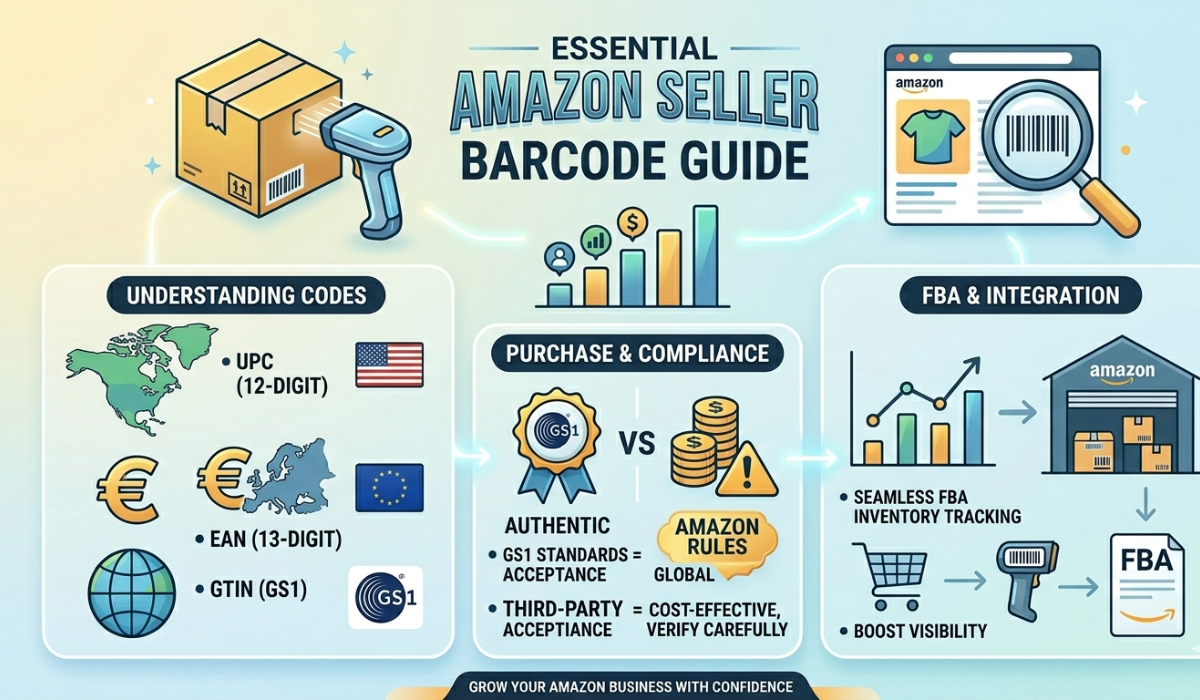
The most widely used barcode formats include:
UPC (Universal Product Code)
Used primarily in the United States and North American retail systems.
EAN (European Article Number)
Used internationally across Europe, Asia, and many global retail markets.
Both formats belong to the GTIN barcode system, which ensures that every product identifier is globally unique.
Real Business Advantages of Using Barcodes in Shopify
Implementing barcodes is not just a technical requirement. It provides measurable business advantages for Shopify sellers.
Operational Efficiency
Barcode scanning automates many processes that would otherwise require manual product lookup.
Inventory Accuracy
Real-time scanning reduces the risk of incorrect stock counts and overselling.
Faster Checkout
Retail and POS transactions become significantly faster with barcode scanning.
Marketplace Compatibility
Products can be listed across major ecommerce platforms more easily when barcodes are available.
Professional Brand Operations
Barcodes signal that a business follows global product identification standards.
When Shopify Businesses Typically Start Using Barcodes
Most Shopify sellers begin implementing Shopify barcodes when they reach one of these growth stages:
- Expanding product catalogs
- Selling across multiple channels
- Opening retail stores
- Working with fulfillment warehouses
- Listing products on major marketplaces
At these stages, manual product tracking becomes inefficient and error-prone.
Barcodes solve these problems by providing automated product identification across systems.
Best Practices for Using Barcodes in Shopify
To ensure smooth operations, Shopify stores should follow several best practices when implementing Shopify barcode systems.
Assign a Unique Barcode to Every Product
Each product or product variant should have its own barcode to avoid confusion. You and Buy Barcodes from gs1upc.net. Best and reliable Shopify barcodes.
Keep Barcode Data Consistent
Once a barcode is assigned to a product, it should not be reused for another item.
Maintain Accurate Product Information
Ensure that barcode identifiers match the correct product name, variant, and SKU.
Integrate Barcode Scanning with Inventory Workflows
Use barcode scanners for receiving inventory, order fulfillment, and retail checkout.
These practices help Shopify businesses maintain accurate product tracking and efficient operations.
Future Growth: Why Barcodes Matter for Scaling Ecommerce Brands
Barcodes are one of the foundational tools used in modern retail and ecommerce infrastructure.
From small Shopify startups to global brands, product identification through barcodes supports:
- Inventory automation
- Global marketplace selling
- Retail expansion
- Warehouse logistics
As a Shopify store grows, barcodes become an essential component of professional product management.
Businesses that implement barcode systems early are better prepared for scaling operations, expanding distribution channels, and managing complex product catalogs efficiently.
Frequently Asked Questions
Do Shopify POS systems require barcodes?
Barcode scanning is commonly used in retail checkout systems. Using barcodes allows Shopify POS to quickly identify products and update inventory automatically.
Can Shopify products be listed on marketplaces without barcodes?
Many major marketplaces rely on barcode identifiers to match products with their global catalog systems. Using valid product GS1 UPC barcodes simplifies marketplace integration.
Do product variants need separate barcodes?
Yes. Each product variation such as size, color, or packaging should have a unique barcode so it can be tracked individually.
What barcode types are commonly used for ecommerce products?
The most widely used product barcodes are UPC and EAN formats, both part of the global GTIN system.
Are barcodes important for inventory management?
Yes. Barcode scanning significantly improves inventory accuracy and reduces manual errors in stock tracking.